One of the most common reasons people visit their dentist is to improve their smile and whitening is the easiest and quickest way to make a noticeable change. However, people have many misconceptions about the terms ‘whitening’ and ‘bleaching’ as well as the benefits versus risks associated with them. For example, several products in the toothpaste aisle of your local store have ‘whitening’ in their name. But how do these products work and will they actually provide the desired results that a person wishes to achieve? Anne Newsome of The Saturday Evening Pot asked me to comment on this very hot topic and provide a little clarity. Her blog is about food, family and faith and highlights some great topics that relate to a healthy lifestyle in general. I am very excited for my advice to be featured in her latest blog post! Check it out here on The Saturday Evening Pot.

[image via thesaturdayeveningpot.com]

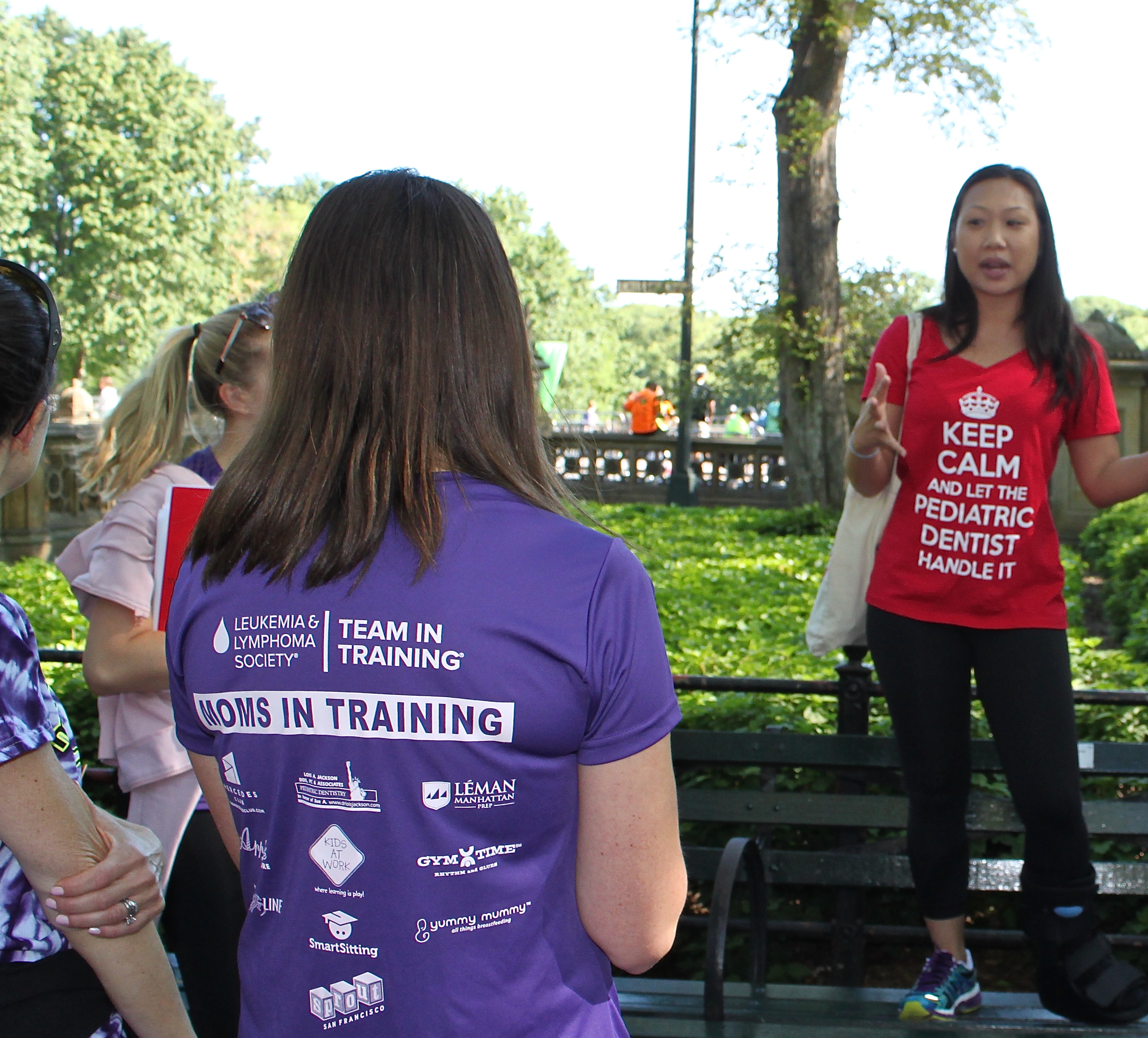
My office, Park View Pediatric Dentistry, is one of the sponsoring partners of Moms In Training -NYC. This past Saturday I had the pleasure of attending their final practice before their next race, The Women’s Fast Track 10K on Saturday, June 14th. Moms In Training is a subdivision of Team In Training, made up of over 300 moms from different New York City neighborhoods. Their mission is to come together for one common goal – to save lives and raise funds for the Leukemia & Lymphoma Society. However, this particular group accomplishes much more. The women in this group motivate each other to get fit, support each other, and have fun. They have professional coaches that help them train and prepare for each race. I was invited on behalf of my office to speak for 2 minutes on why we support this mission. I would have gone running with the moms but as you can see in the photo my left foot is still out of commission following a small foot injury I sustained in the days following my completion of the Brooklyn Half Marathon a few weeks ago. However, once I am allowed to begin to running again, I will most certainly try to get more involved with this group. After all they train in my backyard (Central Park) every week!

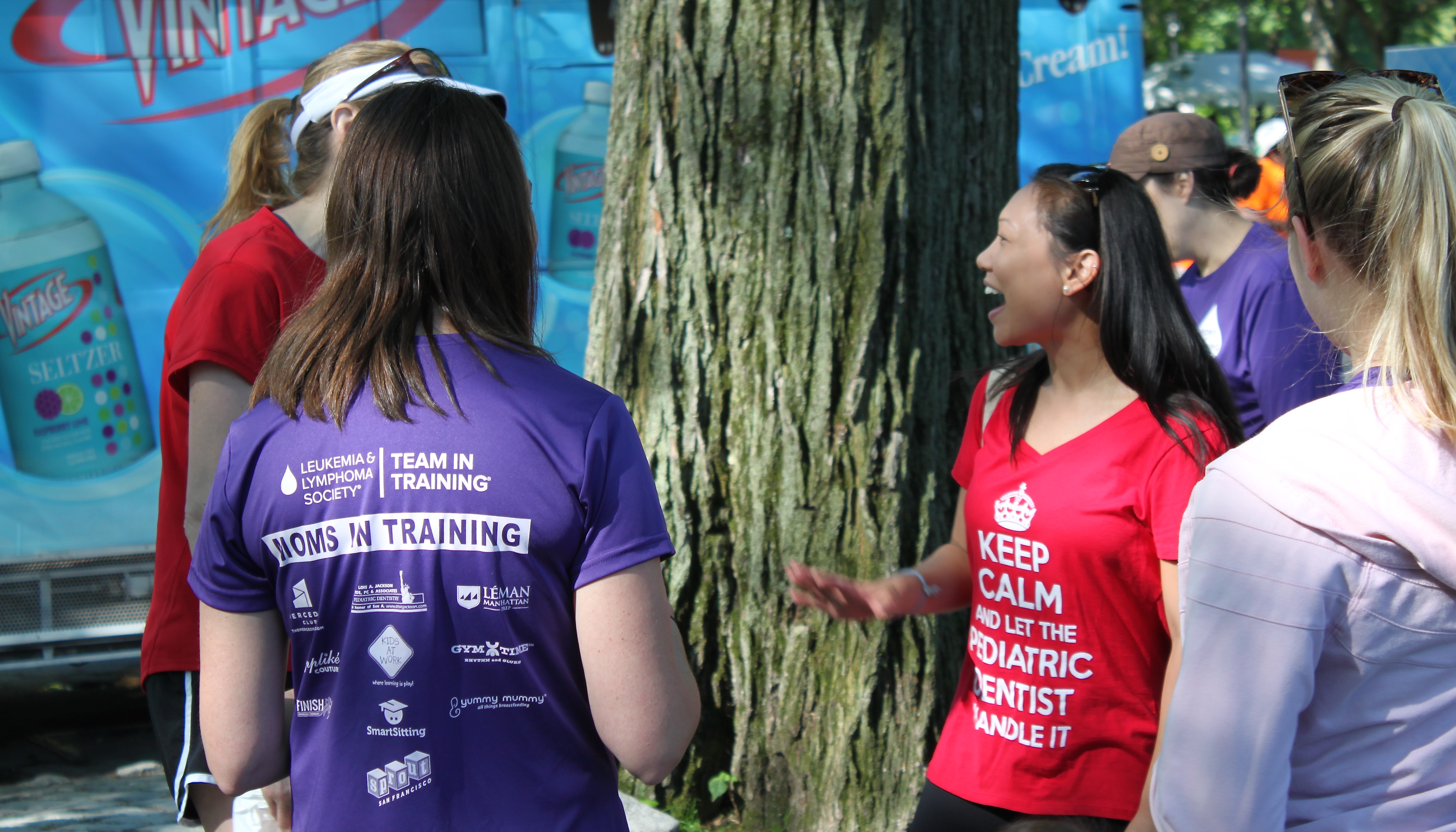
Like my shirt?

This past Sunday, April 28, 2013 I was lucky to be chosen in a lottery to run with 14,999 other runners in the Nike Women’s inaugural Half Marathon in Washington, DC. I have done the Nike Women’s Half before in San Francisco in 2007 but this time I did it with a couple friends and made a little weekend road trip out of it. My friend Heather and I drove with our boyfriends to the DC area where we met up with Erika (another race buddy) and her cousin. Whenever Nike comes to town, a portion of the city shuts down and caters to the race. Thus a majority of Saturday was spent at the Nike Expotique where we picked up our race packets and enjoyed a bunch of freebies from Nike and other race sponsers (Luna, Bare Minerals, Paul Mitchell, Nuun, etc). We also shopped at Nike Georgetown where they were offering a lot of event gear specific to this year’s race. We even had some pampering done at a store called Lush that sells homemade, organic body products that doesn’t test on animals. They gave us their “signature” hand treatment…and of course I ended up buying at least $50 worth of their products, including their solid toothpaste ‘Toothy Tabs’ which of course I could not resist trying (stay tuned for a future blog post on my review of this product). We carb’ed up during early dinner and then rested our sore tourist feet (not the greatest of ideas) in preparation for race day.
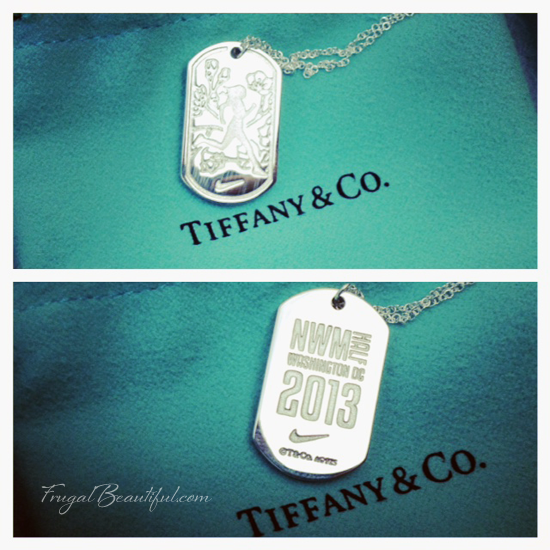
The next morning, I found myself nervously jumping around at 6:50AM at the starting line with my two running buddies Heather and Erika. Even the most mundane decisions become crucial when mixed with adrenaline: should I keep my sweatshirt on for the start of the race then get rid of it later or just take it off now? Do I need to use the bathroom now or wait until after? Will I be able to finish the race painlessly or in agony? Anyone who knows me knows that I’m not the most dedicated runner. Nike offers a structured and easy-to-follow 12 week training program to prep for the half marathon. Between my work schedule, an endless winter on the East Coast (not lending itself to comfortable outdoor runs), on-and-off colds and just plain lack of motivation I did not follow the schedule. Plus my half marathon goal is usually just to finish and have fun touring a city on foot with friends while running for a good cause (The Leukemia & Lymphoma Society) and not feeling pain in the process. I’ve completed enough half marathons in the past that 13.1 miles isn’t so intimidating (of course, 26.2 would be a different story). Needless to say, the race started and off we went. It was the perfect sunny morning and the perfect temperature to do a 13.1 mile run around the nation’s capital. Roughly two hours later, we finished at the same corner of Pennsylvania & 11th, triumphant with our finisher’s t-shirts and Tiffany finisher necklace in hand. I highly recommend anyone (male or female, as the race doesn’t discriminate) who has ever wanted to do a half marathon to do one of the Nike Half Marathons. Not only do they have the ability to create a party out of a half marathon weekend but they also never cease to improve on the experience. This year they created a website with ‘Live Runner Tracking’ which allows anyone (race spectator or remote stalker) to track a specific runner in real-time with just a bib#. The website also offered ‘Share My Run’ which lets runners set preset Facebook posts which automatically update as they pass through certain designated race locations. (top photo via betweenfriendsblog.com)
Here are some weekend and race day highlights that my boyfriend Mike (and #1 fan) took with his snazzy camera and some from my iphone:


Congratulations to Marcelo Barbic (and Kathy!) of San Pedro, CA who is the winner of our National Children’s Dental Health Month giveaway, Lil’ Farley Flossisaurus! Enjoy!

 Like what you see? The bracelets you see (with the exception of the red braided bracelet) were designed by my friend Jaime to raise money for the International Essential Tremor Foundation and The NYU Movement Disorders Center. Jaime was recently diagnosed with Essential Tremor (ET) and has been living (and struggling with the symptoms of it) for the past several months.
I had never heard of ET before and, being the sucker for fashion that I am, only learned about it when I noticed one of her bracelets in a Facebook post. Also known as familial tremor, benign essential tremor or hereditary tremor, essential tremor (ET) is a progressive neurological condition that causes a rhythmic trembling of the hands, head, voice, legs or trunk. The symptoms of the disease also make it difficult to distinguish from Parkinson’s disease and dystonia. Treatment includes a combination of various medications such as Neurontin and Topamax but from what I have learned is that less than 60% of people are effectively helped by drug therapy. For hard-to-manage tremors, surgical therapy may be effective in the form of Deep Brain Stimulation (DBS), where an electrode is placed in the thalamus and is connected to a pacemaker implanted near the collarbone; the electrode and the pacemaker help to block brain activity that causes tremors by way of electrical pulses. Either way, a person diagnosed with ET will have their lives altered tremendously. Instead of being defeated by her diagnosis, Jaime has decided to take action and help to raise awareness and money for research to help people with ET achieve the highest quality of life.
These adorable multicolored bracelets signify several things: the International Essential Tremor Foundation (green and black), the NYU Movement Disorders Center (violet and white) and Parkinson’s Disease (silver – studies have suggested that people with ET have a higher chance of developing PD). They are Pura Vida bracelets that are adjustable (with an adorable pink cord) and waterproof so that you can wear them all the time. I stack them with other bracelets as they are so neutral and also part of the trend of creating a personalized arm party of friendship bracelets, hair ties, bangles and charm bracelets. I have only been wearing these strands on my wrist for a day and have already been getting comments on them. They are available for $5 each. For more information you can email me or send me a message and I can provide you with the details of how to order these from Jaime.
 I recently came across the amazing story of Lentil, which is heavily trending on the web right now. Lentil is a 6-week-old french bulldog puppy born on February 2, 2013 and is the only survivor in his litter of 4 (one of them also was born with a cleft). Taken from his mother too early, surrendered by his owner, and left in a state when failure to thrive was at its greatest, this little fighter won the hearts of thousands of people all over the web. Now he has almost 23,000 fans (and counting) on his Facebook page, a loving foster Mom and is growing stronger each day – soon to find a forever home with the help of the French Bulldog Rescue Network.
Anyone who knows me knows I’m one of the biggest dog lovers in the world, but this particular story really pulls on my heart strings. During my specialty training in Pediatric Dentistry at Stony Brook University, my director was an integral part of the multi-specialty Cleft Palate-Craniofacial Team at the Stony Brook Medical Center. He would get paged when a baby was born with a cleft (lip, palate, complete or partial) and he would drag us into the hospital to see the whole process begin. I was blown away. Dr. Fred Ferguson would examine the baby, take an impression of the baby’s mouth in sticky compound material and design an appliance that the baby would use to feed (and thus thrive) properly. He would design the appliances with acrylic and medical tape and work off of trial and error, following the babies for weeks and months and continuously designing different appliances designed to help the child feed, mold the soft tissue and other functions in preparation for various surgeries that the child would undergo in phases. It was magically, especially given the fact that Dr. Ferguson was never officially trained to do so. I realized how very crucial that first contact with the baby is in order to set the child on a course to thrive and grow properly. Any child who has the support of a cleft palate team from birth is fortunate as it is not a luxury everyone has access to.Let me return to Lentil who is the first dog I have ever “encountered” that has been affected by a cleft. It’s not just cosmetic, but functional as well. Without the help of his foster mom, a daily 3-hour tube-feeding regimen to keep him healthy, monetary support from donations and the French Bulldog Rescue Network Lentil would not have survived. It’s his own little cleft palate team. As much as I wish I could bring you home myself, I’m rooting for you, special little bean!… I’m sure you will find a wonderful family and home soon!
Follow Lentil’s Blog!


Accidents involving the te eth and face are common among children. A child’s tendency to be active before she can fully develop her motor skills and coordination make accidents unavoidable at times. Thus, the most common age for injuries to occur to baby teeth usually falls between 2-3 years. When your child is older, sporting accidents and car accidents are common causes for damage to her permanent teeth. While dental trauma is common, it is also both highly preventable and highly treatable. Different outcomes from a blow to the face can result in teeth becoming displaced, broken or even knocked out completely. If accidents do happen, take comfort in knowing that most dental injuries are treatable and even a tooth that has been knocked out can be saved if the proper treatment is initiated very soon after the injury occurs. There are certain steps that you should take to improve the long-term survival of a tooth after it has been traumatized.
DO
Do seek advanced medical care for severe injuries
The first thing you should do if your child has had a blow to the head or face is to do a quick assessment of your child’s vital signs. You want to make sure that she has not suffered a concussion. If your child loses consciousness or has any signs of nausea or vomiting following an accident, bring her to the doctor or emergency room as these are signs that she may have a concussion. You should also seek care from a doctor for any other more severe injuries to the face or head. Your child’s medical health is paramount and takes priority over any dental injury. After addressing her health status, your medical doctor can also evaluate her dental injuries and make the appropriate referral to a dental professional.
Do seek guidance from your dentist
If your child has had a dental accident, immediately call a dentist. Because the best outcome for teeth that have been injured involve timely management and treatment, all dentists have an ethical obligation to make sure that reasonable arrangements for emergency dental care are made available to their patients. This may involve assessing your child in person following an injury or triaging and giving an appropriate referral to a doctor or facility that is available for assessment and care. Either way, your dentist will be able to guide you down the right path.
While all dentists have been trained in the management of dental emergencies, pediatric dentists have had advanced training in traumatic injuries specifically in children. When coming in for an assessment, be prepared that even though your child is uncomfortable due to the accident, a thorough clinical exam will be necessary and may include intraoral or extraoral radiographs and tests of the teeth in order to appropriately diagnose what type of injury has occurred and what steps need to be followed.
Do be familiar with the initial first-aid management of teeth following trauma
No matter what the injury, timely actions will be important in order to help save the tooth. Different steps are indicated, depending on the scenario. The International Association of Dental Traumatology (IADT) has a great website designed to guide patients and doctors in the management of acute dental trauma. Here are some general steps you can do to help your child before you see the dentist.
If the tooth is loosened or displaced
- If your child displaces a baby tooth, the concern will most likely be its effect on the adult tooth developing nearby. It is advised not to manipulate the baby tooth and see your dentist for treatment. The dentist may decide to leave the tooth in place or choose to extract it. For an adult tooth, use clean hands and try to reposition the tooth using finger pressure. The earlier you do this after the accident, the easier it will be to reposition because after some time a blot clot will form and make it difficult. In some cases, a tooth may be displaced to the point that it gets locked into a different position in the bone. If you are afraid to hurt your child by snapping the tooth back into place, the dentist can do it. Either way, a trip to the dentist or emergency room will ensure that the tooth will be treated properly. Your child may need to have her teeth temporarily splinted depending on the severity of the injury. The splint is generally a flexible splint that looks similar to braces and will help secure the tooth in place until the bone and gums heal around the affected tooth.
If the tooth is broken
- A blow to the tooth can commonly cause it to chip or fracture. The important thing is to try to locate any broken fragments of the teeth if possible and then go to the dentist or emergency room. Depending on how much the tooth is broken, your dentist will be able to determine what needs to be done. In general, a small chip can be either repaired or smoothed down and left alone. In cases where the fractured piece is large enough to expose the nerve, the dentist will need to do immediate nerve treatment to protect the nerve and avoid infection. The tooth will likely need a full root canal, or endodontic treatment in the future.
If the tooth is knocked out
- Sometimes your child may knock out a tooth. This is called an avulsion and it happens when a tooth is knocked completely out of the mouth. The treatment for an avulsed baby tooth will be different from that of an avulsed adult tooth. For a baby tooth you will still want to bring your child to the dentist to have it checked out, but putting the baby tooth back into her mouth is not indicated. An adult tooth avulsion will be more serious. The good news is that an avulsed permanent tooth can likely be saved if certain steps are taken within the first hour (and preferably immediately) following the accident:
- Try to avoid touching the root of the tooth. Pick it up by the crown part and do not rinse or wash the tooth.
- If possible, place the tooth back into her mouth, into the socket in which it came from and have her bite down on a washcloth to keep it in place. Putting it back into the socket will be most ideal if done immediately or within the first 30 minutes. If you are unable to place the tooth back into your child’s mouth, the key is to keep it moist by keeping it in certain liquids such as Hanks Balanced Salt Solution (HBSS), saline or milk. HBSS is a physiologic liquid that has a similar pH and salt concentration to the cells that attach the tooth to the jawbone and thus will keep them alive until the tooth can be replanted. Another way to keep it moist is if you place the tooth between your own cheek and gum. The key is to keep the tooth from drying out and to protect the cells of the root of the tooth from dying, thus providing a better outcome once the tooth is replanted in your child’s mouth. It is best to avoid plain water as a storage medium.
- Go to the dentist or the emergency room for treatment.
Do be aware of all the possible outcomes after trauma
Your dentist should give you all the information regarding all the possible outcomes that may happen following an injury. One of the most common complications is a gradual discoloration or darkening of your child’s tooth following the accident. This generally indicates changes going on in the tooth’s nerve and blood supply after hitting it. It is similar to a bruise. However, because a tooth itself doesn’t have as much blood supply as skin it may not rebound as quickly as a skin bruise. The tooth may lighten up over time or stay dark. The important thing to remember is that discoloration alone does not mean the tooth has to be treated. If discoloration is coupled with pain or infection (which sometimes appears as a swelling or small pimple near the gum line of the tooth), then a visit to the dentist and treatment will be indicated. Another important thing to remember is that if a primary or baby tooth has been hit it is always possible that the permanent tooth that replaces it can become affected depending on the nature of the injury and the developmental stage of the adult tooth at the time of the accident. Your dentist will be able to detail the most likely outcomes of your child’s particular situation and injury.
Do try your best to prevent injuries
Dental injuries in teenagers are commonly the result of accidents during sporting events or practices. All sporting activities have an associated risk of orofacial injuries, especially contact sports. The American Academy of Pediatric Dentistry (AAPD) recommends that your child uses appropriate protective gear while participating in sports. This includes the use of mouthguards during games and practice, as it has been proven to reduce the risk of injury by distributing the forces of impact. For younger children, anticipatory guidance from your dentist is important to impact. For younger children, anticipatory guidance from your dentist is important to avoid age-related accidents.
DON’T
Do not wait to seek dental treatment
Remember that the greatest chance of having a favorable treatment outcome following dental trauma will be when appropriate first-aid and treatment measures are initiated immediately. For an avulsed tooth, the IADT recommends putting the tooth back into the socket or an appropriate storage medium within the first 60 minutes after it is knocked out. After 60 minutes, the treatment prognosis will decrease dramatically. This is why an avulsed permanent tooth is the definition of a true, time-sensitive, dental emergency.
Do not let a knocked-out permanent tooth get dry
There have been cases when a parent comes to the dentist or the emergency room with his child’s avulsed tooth wrapped in a tissue. This is probably the worst thing you can do for your child’s tooth. Healthy teeth are attached to the jawbone by important and delicate Periodontal Ligament (PDL) cells and fibers. When a tooth is knocked out of the mouth these fibers are severed. Thus, keeping an avulsed adult tooth moist will ensure that these cells remain viable so that when the tooth is replanted into her mouth, the tooth has a chance to heal and reattach properly. The tooth will have the best chance of being saved and survive long-term if you can place the tooth back in her mouth or in a proper storage medium such as HBSS, saline or milk immediately or within the first hour. Many hospitals, dental offices, and even schools have a Save-a-Tooth as part of their first-aid kit which contains HBSS in a sterile container. You can purchase a Save-a-Tooth kit online and it may even be a good idea to keep one around the house in case of emergency. The time sensitivity issue in an avulsion emergency refers to the time that it takes to put the tooth back in the mouth or appropriate liquid.
Do not leave the tooth or any tooth fragments behind if possible
When a tooth is avulsed or broken, try to locate and hold onto the tooth and tooth pieces. When your child seeks treatment, your dentist will try to make sure that all pieces are accounted for even if they are not of use for the treatment. If your child cuts her gums or lips and breaks her tooth the dentist will want to make sure that no tooth fragments became imbedded into the wounds, which can cause a dangerous infection if left untreated. The dentist may want to take a radiograph of the soft tissue to confirm this if any tooth fragments are unaccounted for.
Do not miss recommended follow-up appointments
Many of the complications that can occur after an injury may occur days, weeks, months or years after the accident. Depending on the injury, the IADT and AAPD recommends follow up-clinical exams and x-rays of the tooth at different time intervals to monitor it over time. During these visits your dentist will be able to make proper diagnoses of the tooth and ensure that any necessary treatment will be performed in a timely matter. Follow up is just as important as the initial management visit following a dental accident, so be prepared for the traumatized tooth to be examined and followed up for a long time.
Do not panic
It’s important to stay calm and remember the tips you learned in this article. Most parents panic initially because of the amount of blood that is associated with a dental or orofacial injury. While bleeding can be serious, it is also important to note that a lot of bleeding associated with tooth and mouth accidents is very common. The blood supply to the gums, tongue and mouth is very generous which will explain why your child may bleed a lot when her mouth or gums sustain even the most mild form of trauma. This is also the reason that these types of injuries heal very well and quite fast. The bottom line is that you should treat a tooth accident like an emergency, but still keep a clear head so you can take the steps outlined above to help your child have the most positive outcome.
Summary
Acute dental trauma, while tragic, is highly preventable and highly treatable. Remember that you can do a lot after an accident to improve the long-term outcome and survival of a tooth that has been injured. Much of this begins immediately following an injury before she even gets to the hospital or dental office. Stay calm, practice these steps, and be assured that you are doing your best to keep your child’s teeth healthy.
Hey all! I had to reschedule one of my community school dental presentations to a date during the month of March, but I wanted to give those kids a fair chance at winning Lil Farley Flossisaurus. So, I have extended the drawing and a winner will be chosen on March 31, 2013. Good news for those who have not entered! Read more about the giveaway details here and enter at:
http://www.4RP.me/d/EVJX86N
Best of luck!!


All pediatric dentists are trying to do their part for National Children’s Dental Health Month. This year we wanted to do something different, something memorable, and something very New York. So this past Monday me and two of the other pediatric dentists in my office hosted our first ever “Mommy & Me Luncheon” on the Upper East Side of Manhattan not far from our practice. Yes, the Upper East Side – what one blogger describes as: “the home to Gossip Girls and ladies who lunch, tree-lined streets, glorious art galleries and the kind of apartments that have gloved doormen and a line of chauffeurs waiting outside.” Pretty true. However, it is also the home to great mothers who care deeply about their children’s health and are tirelessly involved in the community in which they live. Something I learned first-hand at our event. With the help of one of our friends (and an UES mom herself), we found the perfect location in the basement playroom of a very lovely gloved doorman-building in the upper 70’s. Around 20 moms were in attendance, most with at least one of their children in tow (ranging from infant to pre-school aged). Most of the kids in the group are students at a local school, The Garden House School. It was kind of hard not to recognize this fact since most of the girls were still wearing their adorable school uniforms: a periwinkle blue-and-gray plaid dress with matching hair bow. While our hygienists helped practice brushing on puppets with the kids in different corners of the room, we gave brief informative talks to the mommies on topics such as children’s oral hygiene, fluoride, and teething.
After an easy Q&A and some schmoozing, we sent the moms and tots off with envy-worthy gift bags containing: a Brite Smile bleach pen and electric toothbrush for the moms, an electric kids toothbrush, a mommy-and-me toothbrush, a toddler toothbrush, and an infant finger brush. Not only did I have a great time teaching and playing with the adorable kids but I also enjoyed chatting with some of the moms – some very nice, young, stylish women who remind me of my own best friends.
I also didn’t mind showing off my new JCrew shirt, which I used to spruce up a dull Charcoal gray suit. As expected, the shirt did not go unnoticed with the UES moms. Bravo.

Keep an eye out for word of our next Mommy & Me Luncheon. Who knows, it may soon become THE annual event of the future with the “Ladies-and-Moms who lunch” crowd on the UES 🙂

Here I go again, getting yet another dental post-inspiration while watching an awards show (see my earlier blog post: Em-brace your smile from the 2013 Grammys). This time, it’s about the precocious, talented and adorable Quvenzhané Wallis. If you don’t know who she is, she is the youngest actress to receive a best-actress Oscar nomiation nominated for her lead role of Hushpuppy in Beasts of the Southern Wild. She appeared on the red carpet at tonight’s 2013 Academy Awards wearing a navy dress and wrap combo by Armani, toting a precious puppy purse (apparently one of her signatures). Not only does this girl have a public presence more mature than some of the actresses ten years her senior, but she has an amazing future ahead of her. She has recently been cast to lead in the new Annie, which is being produced by a production dream team that includes Jay-Z, Will Smith and Jada Pinkett Smith and has been slated to debut around Winter 2014. What makes her future truly amazing (in my humble opinion) is her ultimate plan to become a dentist. She has boldly stated her career goals to become a dentist in the past, and affirmed it again tonight during the red-carpet interviews. This amazing and intelligent cutie should be a role model for all children. She and many people around the country have discovered that dentistry is one of the best fields to be in. Dentistry has recently been thwarted into the spotlight, ranking THE best job for 2013 in the US News and World Reports based on several factors such as median income, future job prospects, stress level and quality of work-life balance. Now that’s something I’m definitely smiling about! Good luck, Quvenzhané – tonight and in your dental future!
(Image via WireImage)

 TheTrendySmile